
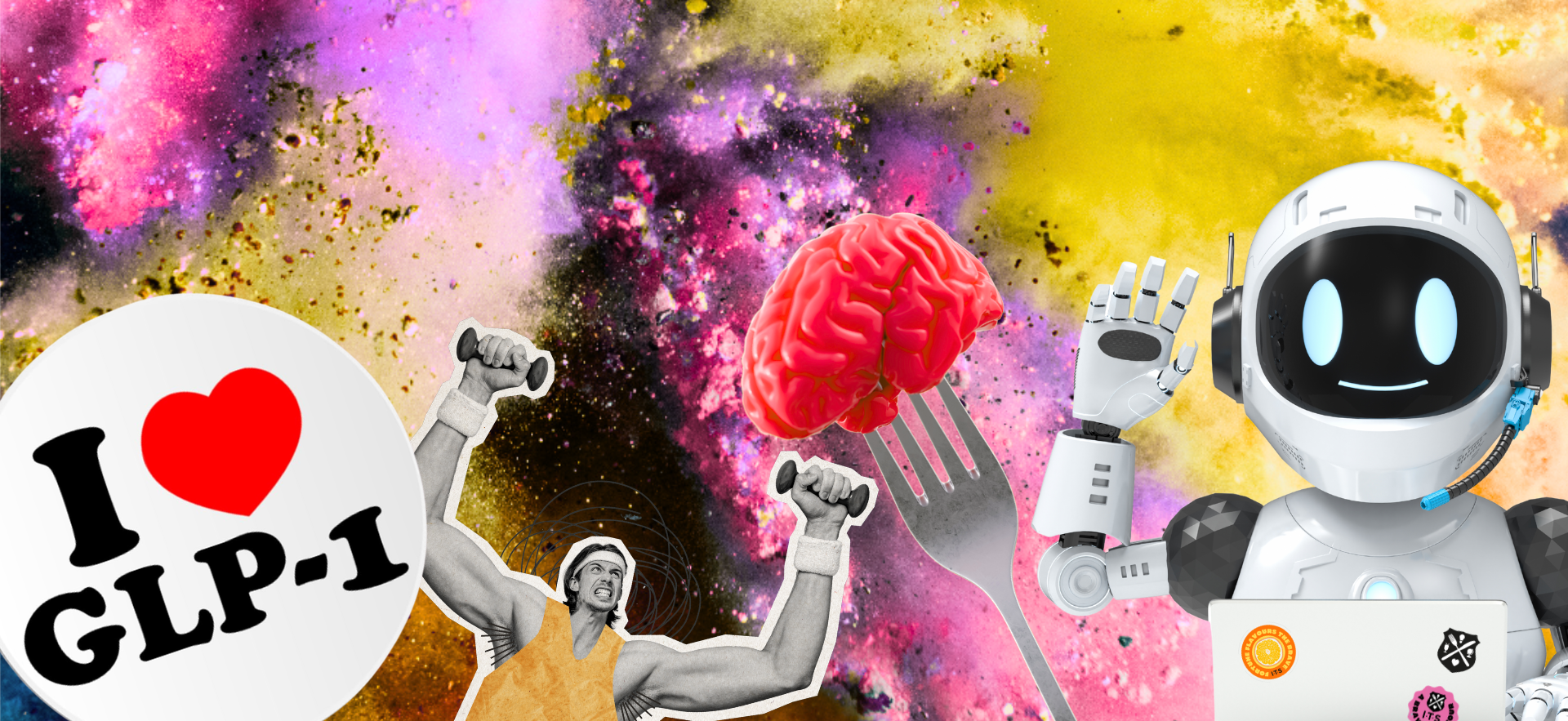
Food and drink is moving fast.
Consumer behaviour is shifting. Categories are blurring. Expectations are getting higher. Brands that move early will be the ones that stay relevant.
We’ve kept our finger on the pulse and served up the top four trends you need to know that are shaping the future of food and drink.
1) Cravings, Cancelled
GLP 1 is changing more than portion size. It is changing the whole relationship people have with food and drink.
Use in Britain climbed from 2.3% to 4.1% of adults between March 2024 and March 2025, and the wider effect is clear. Eating is becoming more functional, more mindful and less driven by reward. Lighter portions, protein rich products and nutrient dense snacks are gaining ground as appetite changes.
That creates a challenge for brands, but also a huge opportunity.
When consumers are eating less, every bite has to earn its place. Products need to deliver satisfaction faster. Flavour has to land quickly, and function needs to feel obvious. This is not a future issue. It is already shaping launches, from supporting dairy drinks aimed at GLP 1 users to supplement boosters and new weight management formats.
The brands that win here will be the ones that make smaller moments feel more satisfying.
2) Your New Best Mate
AI is moving into everyday life, and food and drink is coming with it.
Consumers are becoming more comfortable with AI powered support and decision making. 57% say they are interested in learning more ways to use AI, and 50% say it helps them be more creative. That matters because discovery is changing. People are no longer just searching. They are asking, prompting and expecting tailored answers.
That shift will change how products are found, talked about and bought.
It is already showing up in the market. We are seeing AI inspired drinks, productivity focused beverages designed for screen heavy lifestyles, and AI tools being used to support tastings and product evaluation.
For brands, the message is simple. If AI is becoming part of how consumers decide what to eat and drink, your proposition needs to be sharper, clearer and more relevant than ever.
3) Chill Out Culture
Big nights out are losing their grip.
Consumers are leaning towards wellness, balance and slower social moments. 59% of consumers globally are choosing casual ways to socialise, while social media discussion around hydration mocktails is up 31% year on year. The shift is obvious. The nightclub is giving way to the coffee shop, and dining out is being replaced by cosy, mindful eating at home.
This is changing what people want from food and drink.
They want products that support mood, relaxation and low pressure occasions. They want drinks for unwinding, snacks that feel comforting, and formats that fit a more intentional lifestyle. That is why mindful sipping, relaxing bars and lower alcohol choices are all gaining attention.
This is indulgence with a different energy. You only need to measure how coffee shops now outnumber nightclubs.
4) Food With Benefits
Function is no longer a niche add-on. It is becoming the expectation.
Protein, hydration, collagen, probiotics and adaptogens are showing up in everyday food and drink, creating a new hybrid space where wellness and enjoyment sit side by side. Online conversations in the USA around food and drink that supports the gut-brain axis are up 71%, while conversations around products that improve mood are up 30%.
This is where things get interesting for innovation.
Consumers do not want to choose between taste and benefit. They want both. That is driving growth in gut friendly sodas, fibre rich snacks, protein drinks with stronger claims and products that make function feel easy, natural and enjoyable.
The brands that get this right will not treat function like a bolt on. They will build it into the experience from the first sip or bite.
What This Means for Brands
The biggest trends changing food and drink are all pointing in the same direction.
Consumers want more from every product. More flavour. More value. More benefits. They are rethinking appetite, relying on new tools, changing how they socialise and expecting benefits to show up in everyday choices.
For brands, that means standing still is not an option.
Now is the time to sharpen concepts, rethink flavour delivery and develop products that feel right for where the market is heading next.
Want the full picture? Click here to download our full trends report.